Handmade Luxury: Direct from Jaipur Carpet Studios to Your Home

JAIPUR CARPET STUDIO
ASK THE EXPERT
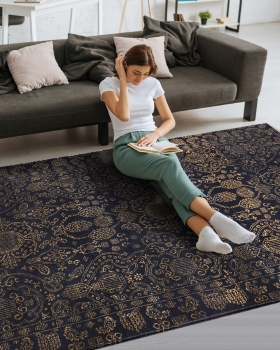
Rug Care Guide — Expert Maintenance 2026
How to Care for a Hand Knotted Rug: Expert Guide
A complete, workshop-tested approach to hand knotted rug care — from everyday vacuuming and spill response to professional cleaning, moth prevention, and safe storage that protects your investment for generations.
By Jaipur Carpet Studio • Updated: June 2026 • 11 min read • 1800+ words
Table of Contents
What You'll Learn in This Guide
“A hand knotted rug is not a disposable furnishing — it is a hand-built textile meant to outlive its owner. Cared for correctly, it grows more beautiful with age.”
Proper hand knotted rug care is the single biggest factor in whether your rug lasts fifteen years or a hundred and fifty. Every knot in a hand knotted rug is tied individually by hand, which makes the piece remarkably durable — but it also means the foundation, pile, and fringe each respond differently to dirt, moisture, and wear. Treat it like an ordinary machine-made rug and you will shorten its life dramatically.
This is not just workshop lore: The Woolmark Company documents the same natural resilience, moisture behaviour and soil resistance that make wool worth caring for properly.
The good news is that caring for a fine rug is not complicated. It simply rewards consistency over intensity: gentle, regular attention does far more than occasional aggressive cleaning. The most common damage we see at our workshop comes not from neglect, but from well-meaning owners using the wrong tools — a beater-bar vacuum, a household stain remover, or a steam cleaner that sets a stain permanently.
In this guide we draw on decades of weaving and restoration experience at Jaipur Carpet Studio to walk you through everything that matters: routine maintenance, spill response, deep and professional cleaning, and how to protect your rug from moths and store it safely. Follow it and your rug will reward you for generations.
Section 01
Why Hand Knotted Rugs Need Special Care
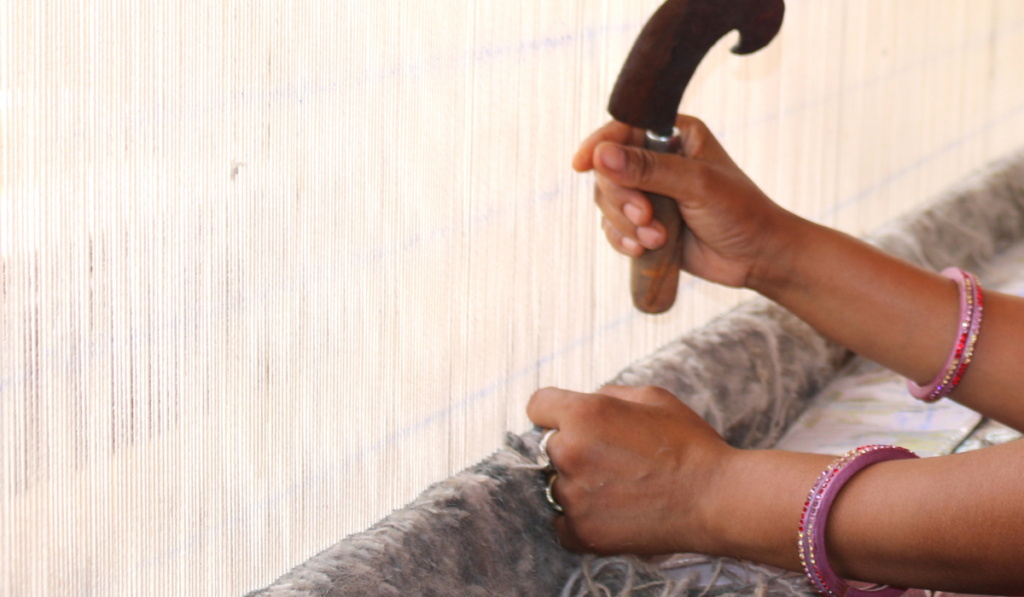
A hand knotted rug is built from natural materials — usually a wool or silk pile tied onto a cotton or wool foundation, finished with a hand-knotted fringe that is an extension of the rug’s warp, not a sewn-on decoration. Because the fringe is structural, damaging it can begin to unravel the rug itself. This is why so much of good hand knotted rug care centres on protecting the fringe and foundation.
Natural fibres also behave differently from synthetics. Wool is naturally resilient and resists soiling, but it is sensitive to harsh detergents, high heat, and prolonged moisture, which can fade vegetable dyes or weaken the foundation. Silk is more delicate still and should almost always be left to professionals. Understanding what your rug is made from is the first step in caring for it correctly — if you are unsure, our team can help you identify the construction.
The principle to remember throughout this guide is simple: work with the rug’s natural structure, never against it. Gentle suction instead of aggressive brushing, blotting instead of rubbing, and lukewarm water instead of heat will keep a hand knotted piece looking its best for decades.
Section 02
Routine Vacuuming & Dusting
Regular vacuuming is the foundation of hand knotted rug care. Grit and fine dust settle deep into the pile, and every footstep grinds those abrasive particles against the fibres — slowly cutting them like tiny blades. Removing that grit before it can do damage is the most valuable habit you can build. Vacuum once a week for rugs in living rooms or hallways, and every one to two weeks for low-traffic rooms.
The Golden Rule of Vacuuming
Always use the suction attachment only — never a rotating beater bar. Beater brushes pull a little pile out with every pass and can shred a hand-knotted fringe in minutes. Set the vacuum to its highest pile setting, and vacuum in the direction of the pile, not against it.
Never vacuum the fringe with a powered head; instead, shake it out by hand or use the suction attachment gently. Two or three times a year, turn the rug over and vacuum the back as well — this loosens embedded grit that works its way down to the foundation. Smaller rugs benefit enormously from a periodic shake or a gentle outdoor beating over a railing, which dislodges dust that no vacuum can reach.
Section 03
Rotation, Rug Pads & Sun Protection
Three quiet habits do more to extend a rug’s life than almost anything else: rotating it, using a quality rug pad, and managing sunlight. None takes more than a few minutes, yet together they prevent the uneven wear and fading that age a rug prematurely.
Rotate Regularly
Turn the rug 180° every six months so foot traffic and sunlight wear it evenly.
Use a Rug Pad
A natural rug pad stops slipping, cushions footfall, and lets the rug breathe to prevent moisture build-up.
Manage Sunlight
Keep rugs out of harsh direct sun; use blinds or UV window film to protect natural dyes from fading.
A good rug pad is the most under-appreciated tool in hand knotted rug care. Beyond stopping slips, it absorbs the impact of footsteps so the foundation flexes less and the pile crushes more slowly. Choose a natural felt or rubber pad cut slightly smaller than the rug, and avoid cheap plastic-mesh pads, which can stick to and discolour the rug’s back over time.
Quick Reference
Your Rug Care Schedule at a Glance
| How Often | Task | Why It Matters |
|---|---|---|
| Immediately | Blot any spill | Stops liquids reaching the foundation and dyes |
| Weekly | Vacuum with suction only | Removes abrasive grit before it cuts fibres |
| Every 6 months | Rotate 180° & vacuum the back | Evens out wear, sun fading, and dust |
| Yearly | Inspect for moths & weak spots | Catches damage early, before it spreads |
| Every 1–3 years | Professional deep cleaning | Removes deep soil safely without harming dyes |
Section 04
Handling Spills & Stains Safely
How you react in the first sixty seconds after a spill matters more than any product you own. The longer a liquid sits, the deeper it travels toward the foundation and the harder it becomes to remove. Act quickly, but gently — panic and scrubbing cause more permanent damage than the spill itself.
Start by blotting, never rubbing. Press a clean white cloth or paper towel onto the spill to lift the liquid, working from the outside of the stain inwards so you don’t spread it. Rubbing pushes the spill deeper and can distort the pile permanently. For solids, lift them away with a spoon rather than pressing down.
For most spills, cool or lukewarm water on a cloth is all you need. Avoid household soaps, spot removers, and especially anything containing bleach or enzymes — these can strip natural dyes and leave a permanent pale patch. Never apply heat or use a hairdryer, which can set a stain and shrink the fibres. Once you have blotted up as much as possible, lay the cloth flat to air-dry the area and keep foot traffic off it until fully dry.
If a stain resists this gentle treatment — or for anything oily, coloured, or set-in — stop and call a professional rather than escalating to stronger chemicals. A specialist can almost always lift a stain that a household product would have locked in permanently.
Section 05
Deep & Professional Cleaning
Even a well-vacuumed rug gradually accumulates deep soil that surface cleaning cannot reach. Most hand knotted rugs need a thorough deep clean every one to three years, depending on foot traffic, pets, and whether anyone walks on it with shoes. High-traffic entry and living-room rugs sit at the shorter end of that range.
For valuable, antique, or silk rugs, we strongly recommend professional cleaning rather than a DIY wash. Specialists submerge the rug, test the dyes for colourfastness, wash with pH-balanced solutions, rinse thoroughly, and dry it flat under controlled conditions — a process that removes embedded grit and refreshes the pile without risking the foundation. They will also spot early moth or structural damage you might miss.
If you choose to clean a sturdy wool rug at home, work outdoors or on a hard floor, use cool water with a small amount of rug-safe wool detergent, and work in sections with a soft brush in the direction of the pile. Rinse thoroughly until the water runs clear — leftover detergent attracts dirt — then squeegee out excess water and dry the rug flat with good air circulation. Never machine-wash, steam-clean, or tumble-dry a hand knotted rug, and never put it away even slightly damp.
Section 06
Moth Prevention & Long-Term Storage
Wool is a natural protein fibre, which makes it a target for clothes moths and carpet beetles — especially in undisturbed areas under furniture or in storage. The larvae, not the adult moths, do the damage, grazing on the pile and leaving bare patches. The best defence is simply use and movement: a rug that is regularly vacuumed, rotated, and walked on rarely develops an infestation.
Pay special attention to the parts of the rug you cannot see — vacuum underneath furniture and along edges, and lift the rug a few times a year to check the back. If you spot fine sand-like debris, webbing, or bare patches, isolate the rug and contact a professional promptly, as moth damage spreads quickly once established.
To store a hand knotted rug, first make sure it is completely clean and dry, since soil and moisture both attract pests. Roll it — never fold, which creases the foundation — with the pile facing inward, wrap it in breathable cotton or acid-free paper rather than plastic, which traps moisture and encourages mildew. Store it off the floor in a cool, dry, well-ventilated space, and unroll it to inspect and air it out every few months.
The Bottom Line
Care That Lasts a Lifetime
Good hand knotted rug care is mostly about consistent, gentle habits: vacuum with suction only, blot spills immediately, rotate twice a year, keep harsh sun off the dyes, and bring in a professional every one to three years. Avoid beater bars, household stain removers, heat, and plastic wrapping, and your rug will stay vivid and strong for generations.
✓ Always Do
Vacuum with suction only • blot spills with water • rotate every 6 months • use a rug pad • clean professionally every 1–3 years.
✗ Never Do
Use a beater bar • rub stains • apply bleach or heat • steam or machine wash • store damp or wrapped in plastic.
Questions Answered
Hand Knotted Rug Care: FAQs
▼ How often should I clean a hand knotted rug?
▼ Can I vacuum a hand knotted rug normally?
▼ How do I remove a stain from a hand knotted rug without damaging it?
▼ Is professional cleaning really necessary for hand knotted rug care?
▼ How do I protect my rug from moths?
▼ Can I use a steam cleaner or carpet shampooer on my rug?
▼ How should I store a hand knotted rug I'm not using?
Ready to Find Your Forever Rug?
Every rug at Jaipur Carpet Studio is hand knotted in our own workshop and built to be cared for and treasured for generations. Explore our collection, or ask our experts for personalised care and custom-size advice.
Factory-Direct • Custom Sizes • Worldwide Shipping • Certificate of Authenticity
Keep Reading